
Table of Contents
Learning Spanish is a journey full of exciting milestones, but one of the trickiest hurdles for learners is mastering irregular verbs. These verbs don’t follow the regular conjugation patterns, which can make them seem daunting at first. However, with the right approach and understanding, you can conquer them with confidence.
In this guide, we’ll break down the essentials of irregular verbs, providing you with clear explanations and practical tips to help you get a firm grip on them. We’ll explore the most common irregular verbs, explain why they break the rules, and offer strategies to remember their conjugations. So, if you’re ready to tackle this challenge head-on and demystify these irregularities, let’s dive in and make Spanish learning a bit more manageable.
Differences between regular and irregular verbs
In Spanish, verbs can be either regular or irregular. Here’s a breakdown to help you understand their structure and differences.
Basic Structure of Verbs
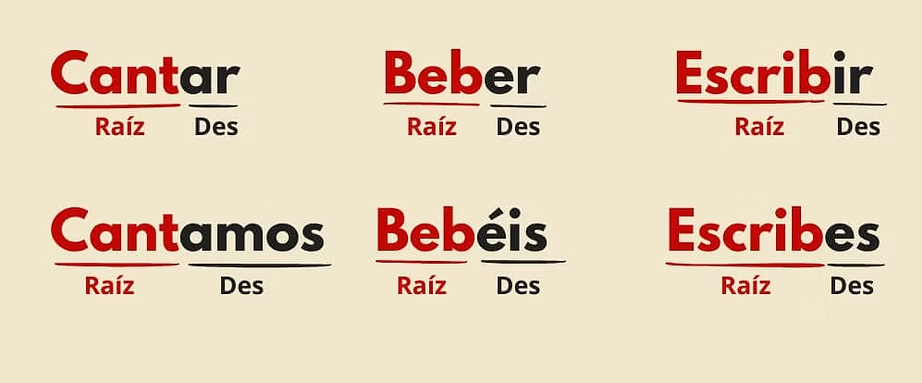
Every verb in Spanish consists of two main parts:
- Raíz (Root): This part carries the verb’s meaning.
- Desinencia (Ending): This part indicates the grammatical person, number, tense, mood, and aspect of the verb.
Regular Verbs
Regular verbs are those whose root remains unchanged, while their endings follow the easy and predictable pattern in the conjugation of their different tenses.
| Aceptar | Acepto, aceptas, aceptaron, aceptaré, aceptaremos… |
| Escribir | Escribo, escriben, escribirán, escribieron, escribáis… |
| Comer | Comeremos, comieron, comes, como, comeré, comiste |
Irregular Verbs
Irregular verbs do not follow these standard patterns. They exhibit changes in the root, the ending, or both, in one or more of their forms.
| Hacer | Hago, haces, hiciste, haremos, hagáis, hizo… |
| Ir | Voy, vamos, vayamos, vayan, iré, vais, iremos… |
| Contar | Cuento, cuentan, contamos, contaremos, conté… |
How to Recognize Irregular Verbs
Recognizing irregular verbs in Spanish involves comparing their conjugation patterns to those of regular verbs such as “amar” (to love), “temer” (to fear), and “partir” (to leave).
Here’s how you can identify them:
- Conjugation Comparison: Conjugate the verb in the present, simple past, and future indicative tenses. If the verb’s root or ending deviates from the standard patterns of regular verbs, it’s an irregular verb.
- Common Patterns: Irregular verbs often follow specific patterns in certain tenses. If a verb shows a change in one tense, similar changes are likely to appear in other tenses.
There are three main correlations for irregular verbs:
- First Correlation: Present indicative, present subjunctive, and imperative forms. For example: “vengo” (I come), “venga” (come – subjunctive), “vengan” (come – imperative).
- Second Correlation: Simple past indicative, imperfect subjunctive, and future subjunctive. For example: “vine” (I came), “viniera” (came – imperfect subjunctive), “viniere” (come – future subjunctive).
- Third Correlation: Future indicative and conditional. For example: “vendré” (I will come), “vendría” (I would come).
By understanding these patterns and practicing with different verbs, you’ll be able to identify and master irregular verbs in Spanish more effectively.
Types of Irregular Verbs in Spanish
Irregular verbs in Spanish can be grouped based on the changes they exhibit. Here’s a breakdown of the most frequent types:
Group 1: Vowel Changes (E to I)
In some forms, the vowel e changes to i. For example:
Medir: yo mido, él midió, nosotros midamos.
Group 2: Vowel Changes (O to UE)
In some forms, the vowel o changes to the diphthong ue. For example:
Soñar: yo sueño, ellos sueñan.
Group 3: Vowel Changes (E to IE)
In some forms, the vowel e changes to the diphthong ie. For example:
Entender: yo entiendo, tú entiendas, ellos entienden.
Group 4: Consonant Changes or Additions
Some verbs change or add consonants in their conjugations. For example:
Salir: yo salgo, nosotros salgamos.
Crecer: tú crezcas, nosotros crezcamos.
Reducir: yo reduje, tú redujiste, ellos redujeran.
Group 5: Vowel Changes (E/I to D)
In some forms, the vowels e or i change to d. For example:
Venir: yo vendré, tú vendrás, nosotros vendremos.
Group 6: Adding Y in the First Person Singular
In the first person singular of the present indicative, some verbs add y. For example:
Ser: yo soy.
Ir: yo voy.
Estar: yo estoy.
Group 7: Loss of Consonant and Vowel
Some verbs lose a consonant and a vowel in certain forms. For example:
Hacer: yo haré, nosotros haremos, ellos harán.
Group 8: Vowel Changes (I to Y)
In some forms, the vowel i changes to y. For example:
Huir: yo huyo, nosotros huyamos, él huyó.
Orthographic changes that follow systematic language rules, such as hice/hizo or saco/saque, are not considered irregularities.
Other common irregular verbs
| Verbo (Infinitivo) | Presente de Indicativo | Pretérito Perfecto Simple | Futuro Simple |
| Ser (to be) | soy, eres, es, somos, sois, son | fui, fuiste, fue, fuimos, fuisteis, fueron | seré, serás, será, seremos, seréis, serán |
| Ir (to go) | voy, vas, va, vamos, vais, van | fui, fuiste, fue, fuimos, fuisteis, fueron | iré, irás, irá, iremos, iréis, irán |
| Hacer (to do/make) | hago, haces, hace, hacemos, hacéis, hacen | hice, hiciste, hizo, hicimos, hicisteis, hicieron | haré, harás, hará, haremos, haréis, harán |
| Tener (to have) | tengo, tienes, tiene, tenemos, tenéis, tienen | tuve, tuviste, tuvo, tuvimos, tuvisteis, tuvieron | tendré, tendrás, tendrá, tendremos, tendréis, tendrán |
| Poder (to be able) | puedo, puedes, puede, podemos, podéis, pueden | pude, pudiste, pudo, pudimos, pudisteis, pudieron | podré, podrás, podrá, podremos, podréis, podrán |
| Venir (to come) | vengo, vienes, viene, venimos, venís, vienen | vine, viniste, vino, vinimos, vinisteis, vinieron | vendré, vendrás, vendrá, vendremos, vendréis, vendrán |
| Decir (to say) | digo, dices, dice, decimos, decís, dicen | dije, dijiste, dijo, dijimos, dijisteis, dijeron | diré, dirás, dirá, diremos, diréis, dirán |
| Querer (to want) | quiero, quieres, quiere, queremos, queréis, quieren | quise, quisiste, quiso, quisimos, quisisteis, quisieron | querré, querrás, querrá, querremos, querréis, querrán |
| Poner (to put) | pongo, pones, pone, ponemos, ponéis, ponen | puse, pusiste, puso, pusimos, pusisteis, pusieron | pondré, pondrás, pondrá, pondremos, pondréis, pondrán |
| Saber (to know) | sé, sabes, sabe, sabemos, sabéis, saben | supe, supiste, supo, supimos, supisteis, supieron | sabré, sabrás, sabrá, sabremos, sabréis, sabrán |
| Salir (to leave) | salgo, sales, sale, salimos, salís, salen | salí, saliste, salió, salimos, salisteis, salieron | saldré, saldrás, saldrá, saldremos, saldréis, saldrán |
| Ver (to see) | veo, ves, ve, vemos, veis, ven | vi, viste, vio, vimos, visteis, vieron | veré, verás, verá, veremos, veréis, verán |
| Oír (to hear) | oigo, oyes, oye, oímos, oís, oyen | oí, oíste, oyó, oímos, oísteis, oyeron | oiré, oirás, oirá, oiremos, oiréis, oirán |
| Conducir (to drive) | conduzco, conduces, conduce, conducimos, conducís, conducen | conduje, condujiste, condujo, condujimos, condujisteis, condujeron | conduciré, conducirás, conducirá, conduciremos, conduciréis, conducirán |
| Traer (to bring) | traigo, traes, trae, traemos, traéis, traen | traje, trajiste, trajo, trajimos, trajisteis, trajeron | traeré, traerás, traerá, traeremos, traeréis, traerán |
| Conocer (to know [a person]) | conozco, conoces, conoce, conocemos, conocéis, conocen | conocí, conociste, conoció, conocimos, conocisteis, conocieron | conoceré, conocerás, conocerá, conoceremos, conoceréis, conocerán |
| Construir (to build) | construyo, construyes, construye, construimos, construís, construyen | construí, construiste, construyó, construimos, construisteis, construyeron | construiré, construirás, construirá, construiremos, construiréis, construirán |
| Huir (to flee) | huyo, huyes, huye, huimos, huís, huyen | huí, huiste, huyó, huimos, huisteis, huyeron | huiré, huirás, huirá, huiremos, huiréis, huirán |
| Conocer (to know [a person]) | conozco, conoces, conoce, conocemos, conocéis, conocen | conocí, conociste, conoció, conocimos, conocisteis, conocieron | conoceré, conocerás, conocerá, conoceremos, conoceréis, conocerán |
| Elegir (to choose) | elijo, eliges, elige, elegimos, elegís, eligen | elegí, elegiste, eligió, elegimos, elegisteis, eligieron | elegiré, elegirás, elegirá, elegiremos, elegiréis, elegirán |
| Seguir (to follow) | sigo, sigues, sigue, seguimos, seguís, siguen | seguí, seguiste, siguió, seguimos, seguisteis, siguieron | seguiré, seguirás, seguirá, seguiremos, seguiréis, seguirán |
Learn to flow at the Dublin Institute of Spanish
Mastering irregular verbs in Spanish can seem daunting, but with practice and the right approach, you can conquer them. Understanding their patterns and practicing regularly will make a significant difference in your fluency. Remember, recognizing these irregularities is a key step in mastering the language.
If you’re eager to learn more and improve your Spanish, why not book a free trial class with us at Dublin Institute of Spanish? Our tailored lessons and experienced native teachers will guide you through the intricacies of the Spanish language, helping you become proficient and confident. Don’t wait—start your journey to mastering Spanish today!