There is always room for knowledge… Or delicious food to try!
Table of Contents
A Rich Culinary Journey from Ancient Roots to Modern Tables
If you step inside a traditional tapas bar in Madrid, Seville, or San Sebastián on a Friday evening, you will instantly notice a unique energy. It is not just about the food; it is a ritual. Plates of glistening jamón are sliced with surgical precision, wine pours generously into short glasses, and laughter bounces off tiled walls. For the Spanish, gastronomy is not a mere daily necessity—it is a central pillar of life, a form of communal storytelling, and a proud expression of regional identity.
But how did this vibrant food culture come to be? Directly brought to you by our native Spanish team at the Dublin Institute of Spanish, we invite you to pour yourself a glass of Rioja (or a nice Albariño, if you prefer whites) as we take a leisurely stroll through the history of Spanish gastronomy. For our adult and senior learners here in Dublin, understanding the food is just as important as mastering the subjunctive. After all, the best conversations in Spain always happen around a dinner table.
How It Started: Ancient Roots, Phenicians, and the Roman Empire
To truly understand the essence of Spanish cuisine, we must turn back the clock more than three millennia. Long before the concept of “Spain” even existed, ancient civilisations were already laying the groundwork for what would become a global culinary powerhouse.
Around 1100 B.C., the Phoenicians settled in the southwestern bay of Cádiz, establishing a port they called Gádir. These maritime traders did something remarkable: they started curing the abundant local pork using sea salt from the Atlantic marshes, effectively creating the earliest ancestor of today’s legendary Jamón Ibérico. If you have ever treated yourself to a plate of top-tier acorn-fed ham, you have these ancient mariners to thank.
Centuries later, the expansion of the Roman Empire transformed the Iberian Peninsula (then named Hispania) into the literal breadbasket of Rome. The Romans were masters of large-scale agriculture. They covered the undulating landscapes of Andalusia and Castilla with sprawling olive groves and endless vineyards, formalising the production of olive oil and wine.
They also introduced Garum, a highly prized, intensely savoury fermented fish sauce that was exported en masse to the imperial elites in Rome. Hispania’s olive oil was considered the finest in the ancient world—so much so that a mountain of discarded Spanish oil amphorae (Monte Testaccio) still stands in Rome today as a historical testament to that booming trade.
The Moorish Renaissance: Spices, Irrigation, and Al-Andalus
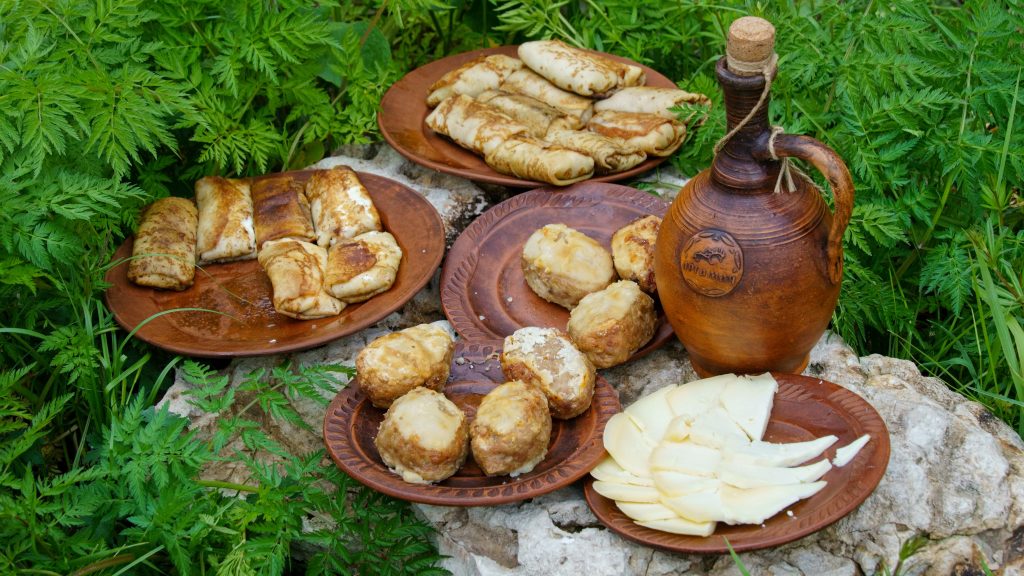
In the year 711 A.D., a profound cultural shift reshaped the landscape of the peninsula. The Moors crossed the straits from North Africa, bringing with them a sophisticated civilization that would rule significant parts of Spain (Al-Andalus) for nearly eight centuries.
While medieval Northern Europe was experiencing a culinary dark age, Islamic Spain was thriving in an agricultural and intellectual renaissance. The Moors introduced revolutionary irrigation techniques, transforming arid plains into lush gardens. They brought with them an array of incredible ingredients that are now completely synonymous with Spanish gastronomy:
- Almonds: The foundational ingredient for iconic Spanish sweets like turrón and regional cold soups like Ajo Blanco.
- Citrus & Fruits: Oranges, lemons, pomegranates, and figs. The famous bitter oranges of Seville are a direct legacy of this era.
- Rice: The vital component that would later make Valencia famous worldwide.
- Spices: Cumin, coriander, nutmeg, and, most importantly, saffron—the golden threads that give traditional rice dishes their vibrant hue and earthy aroma.
The Moorish influence also brought a love for combining sweet and savoury flavours in a single dish, a technique you can still taste today in certain Andalusian stews and meat pies.
The 15th Century: The Discovery of the Americas and a Global Revolution
The year 1492 marked the end of the Reconquista under the Catholic Monarchs, Isabella and Ferdinand, but it also opened the gates to the New World. When Spanish ships returned from the Americas, they carried a treasure trove of botanical wonders that would completely alter the culinary fabric of Europe.
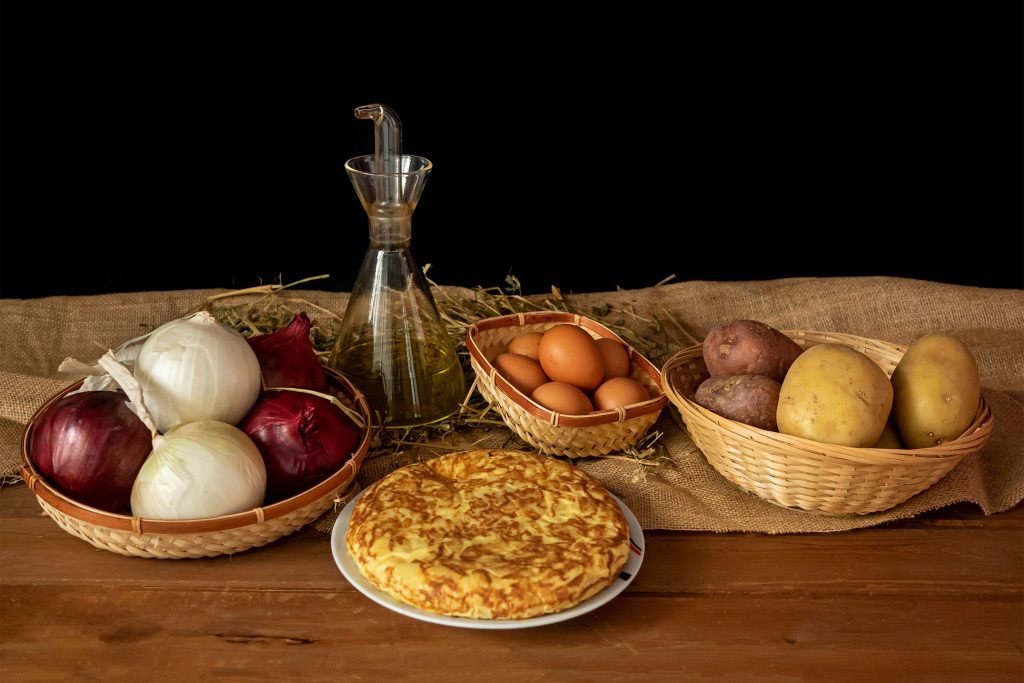
Imagine Italian food without tomatoes, or Irish history without the potato. It sounds impossible, doesn’t it? Yet, all of these staples arrived through Spanish ports. Spain was the European gateway for:
- Tomatoes and Bell Peppers: Which directly enabled the creation of refreshing summer staples like Andalusian Gazpacho and hearty vegetable roasts like Pisto Manchego.
- Potatoes: The essential ingredient for the absolute king of Spanish home cooking: the Tortilla de Patatas (Spanish Omelette).
- Pimentón (Smoked Paprika): Obtained from drying and grinding New World peppers. This spice became the definitive flavor profile of Spanish charcuterie, giving chorizo its deep red colour and signature smoky kick.
- Chocolate: Initially consumed as a bitter, spiced drink by the Aztec nobility, it was sweetened with sugar in Spanish monasteries and became an aristocratic obsession across the continent.
This era was a true culinary revolution. Ingredients that were initially treated with suspicion by botanists eventually found their way into the pots of peasant home cooks, blending beautifully with local olive oil and garlic to form the bedrock of traditional Spanish cuisine.
The 19th and 20th Centuries: From Golden Eras to Culinary Modernism
As the centuries progressed, the history of Spanish cuisine mirrored the socio-political fortunes of the country. The 19th century saw the birth of the public restaurant culture in Spain’s growing cities, where regional dishes were elevated to suit the tastes of the emerging bourgeoisie.
However, the early to mid-20th century brought immense challenges. The hardships of the Spanish Civil War (1936–1939) and the subsequent decades of economic isolation meant that gastronomy became focused entirely on survival. This was the era of cocina de subsistencia—making the absolute most out of scarce ingredients. Incredible resourcefulness shone through: stale bread was transformed into comforting Migas or garlic soups (Sopa de Ajo), and every single part of the pig was utilised in slow-cooked stews.
By the late 1960s and 1970s, as Spain reeled back into the global spotlight, a spectacular culinary awakening took place. In the Basque Country, visionary chefs like Juan Mari Arzak looked at French Nouvelle Cuisine and thought, “We can do this with our own seasonal, local ingredients”. This gave birth to the Nueva Cocina Vasca (New Basque Cuisine), prioritizing lighter textures, perfectly cooked seafood, and refined presentation.
This movement paved the way for Ferran Adrià in the 1990s and 2000s at his legendary restaurant, El Bulli, located on the rugged coast of Catalonia. Adrià completely rewrote the rules of cooking through molecular gastronomy. He pioneered techniques like culinary foams, spherification (turning liquids into burst-in-the-mouth spheres), and liquid nitrogen cooking. Suddenly, Spain was no longer just a destination for cheap sunshine and simple paella; it had officially become the absolute capital of world avant-garde cuisine.
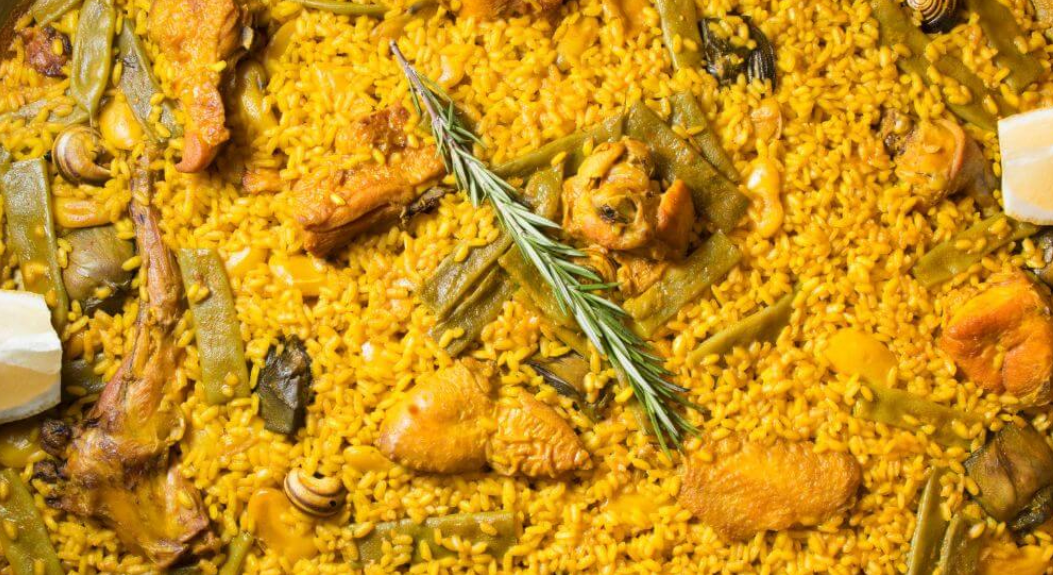
Regional Spanish Gastronomy: a map of diverse flavours
One of the most important things we teach our adult students at the Dublin Institute of Spanish is that there is no single “national” dish in Spain. Instead, Spain is a culinary patchwork quilt dictated by geography and climate.
The Cantabrian Coast & The Basque Country (The North)
Known for its dramatic cliffs and heavy rainfall, the North is paradise for seafood lovers. The Basques are world-famous for their Pintxos—artistic, gourmet bites skewered onto a slice of bread, displayed beautifully along bar counters in San Sebastián. Key dishes include Bacalao al Pil-Pil (cod cooked in olive oil and garlic until it forms a creamy emulsion) and fresh hake.
Catalonia & Valencia (The East)
Catalonia offers the brilliant concept of Mar i Muntanya (Sea and Mountain), combining ingredients like chicken with prawns or pork with snails in rich, complex sauces. Valencia, with its vast coastal wetlands, is the undisputed birthplace of Paella. True Valencian paella does not contain chorizo or seafood; it is a rustic dish made with short-grain rice, rabbit, chicken, snails, and flat green beans.
Andalusia (The South)
A land of intense summer heat, the South mastered the art of cold soups like Gazpacho and Salmorejo to keep cool. It is also the spiritual home of pescaíto frito (perfectly crisp, flash-fried fish) and the world-renowned sherry wines of Jerez, which pair sublimely with locally cured ham.
The Central Plains (Castilla y León, Madrid)
The vast, windswept high plains experience freezing winters and scorching summers. Here, comfort food rules. Think of rich bean stews like Cocido Madrileño or succulently tender roasts cooked in traditional wood-fired clay ovens.
Top Historic Spanish Restaurants: Dining with History
If you are planning a cultural getaway to Spain to put your Spanish language skills to the test, visiting iconic culinary landmarks is a must. While Spain boasts some of the most avant-garde modern restaurants in the world (such as El Celler de Can Roca or Disfrutar), there is a distinct charm in dining at heritage establishments where the recipes have remained unchanged for centuries.
Here are three top historic Spanish restaurants that offer a profound taste of living history:
Sobrino de Botín (Madrid)
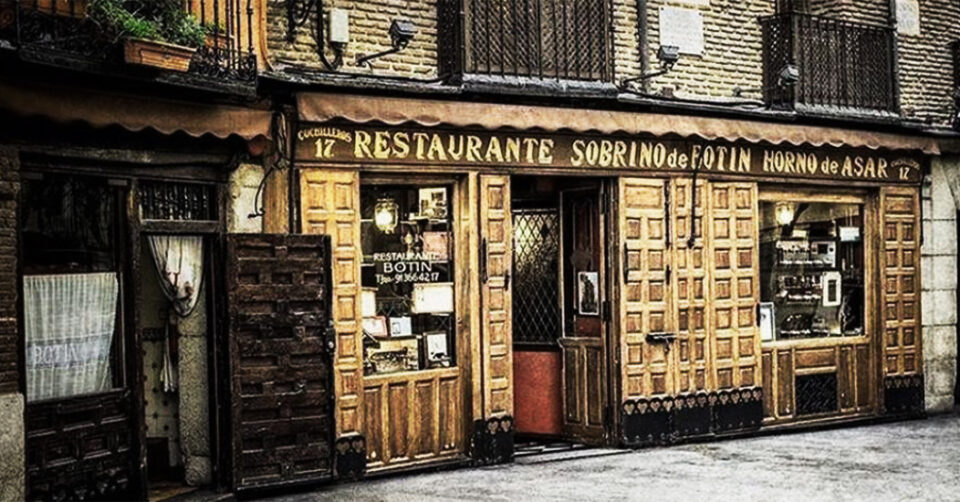
Founded in 1725, Sobrino de Botín holds the official Guinness World Record as the oldest continuously operating restaurant in the world. Located just a short stroll from Madrid’s Plaza Mayor, this place is an absolute institution. The legendary artist Francisco de Goya reportedly worked there as a cafe waiter in his youth, and Ernest Hemingway made it his regular haunt, immortalizing Botín in the closing pages of his novel The Sun Also Rises.
The crown jewel of their menu is the Cochinillo Asado (roast suckling pig), prepared in the original wood-fired cast-iron oven that has been kept warm continuously for over three centuries. The skin is impossibly crisp, and the meat melts like butter.
Casa Gerardo (Prendes, Asturias)
If your travels take you to the green, dramatic landscapes of Northern Spain, Casa Gerardo is an absolute must-visit. Operating since 1882, this beautiful multigenerational family estate has been serving authentic Asturian cuisine for over 140 years.
While they hold a well-deserved Michelin star for their contemporary touches, people travel from all corners of the globe for their definitive version of Fabada Asturiana (a rich white bean stew with chorizo, morcilla, and pork belly) and their legendary caramelized rice pudding (Arroz con Leche), which redefines the concept of comfort food.
7 Portes (Barcelona)
Established in 1836, 7 Portes is one of Barcelona’s most historic and elegant dining rooms. Its elegant salons have welcomed cultural icons ranging from a young Pablo Picasso to Joan Miró, Orson Welles, and Alexander Fleming.
Specializing in traditional Catalan cuisine and rich rice dishes, it is the perfect spot to experience a classic Sunday lunch. Ordering their Paella Parellada—a luxurious “lazy man’s paella” where all the seafood is peeled and meats are boneless—while sitting beneath mirrors that have witnessed nearly two centuries of history is an unforgettable experience.
What will the future of Spanish Gastronomy look like?
Although its style is already defined, like many cultures, it will always continue developing new dishes inspired by other cuisines and food science advances. For example, the use of molecular techniques to cook reinvented Spanish recipes or mixes between French and Spanish cuisine.
Related to the molecular gastronomy aspect, which consists of a mix of alchemy and cooking skills, we can find great inventions like spherifications made from all the ingredients of the Spanish historically traditional dish “Cocido Madrileño”, crazy pastry dishes like “Eternity by Calvin Klein – Jordi Roca” and unimaginable foods like eating “Air” flavoured with the freshest ingredients of a Spanish region.
In conclusion, Spanish Gastronomy is a reflection of the country’s rich history, diverse culture, and natural resources. From its Roman and Moorish influences to the discoveries of the Americas, Spanish cuisine has evolved over the centuries to become one of the most renowned and beloved cuisines in the world.
Bring the Magic of Spain to Dublin
Learning a language is about so much more than memorising grammar tables or vocabulary lists in a classroom. It is about understanding the passion, the heritage, and the lifestyle of the people who speak it. In Spain, food is the ultimate social glue. It is an invitation to slow down, converse, share, and enjoy the present moment with friends and family.
At the Dublin Institute of Spanish, we bring that exact cultural passion to our adult and senior language courses. Whether you are a absolute beginner looking to confidently order your first plate of croquetas in Madrid, or an advanced speaker wishing to debate the finer points of regional Spanish politics over a glass of Rioja, we have a tailored programme waiting for you.
Why not start your next cultural chapter today? Join our vibrant community of like-minded learners right here in the heart of Dublin, and let’s explore the beautiful Spanish language together—one delicious step at a time. ¡Buen provecho y hasta pronto!
These top-rated Spanish restaurants offer a unique and unforgettable dining experience. Whether you’re a foodie or simply looking to indulge in some delicious Spanish cuisine, these restaurants are sure to impress.
If you plan to go to Spain, for sure check out our “10 essential tips for travelling from Ireland to Spain this Summer 2023“. We advise some recommendations for the trip as well as etiquette tips for going to this restaurant.